

Pepsinogen I(PGI)
Number: LD-PGI-01
Category:
Gastric function series
Product Description
Project Introduction
biological characteristics of pepsinogen
Pepsinogen (Pepsinogen, referred to as PG) is a precursor of pepsin, according to the biochemical properties and immunogenicity is divided into 2 subgroups, for pepsinogen I ( PG I) and pepsinogen II (PGII). About 1% of pepsinogen enters the blood and exists stably. The content of PG I and PG II in serum reflects the number of gastric mucosal glands and cells, and also indirectly reflects the secretory function of different parts of gastric mucosa. PG index in various gastric diseases have different degrees of change, to provide reliable diagnostic value for clinical.
Clinical significance of pepsinogen
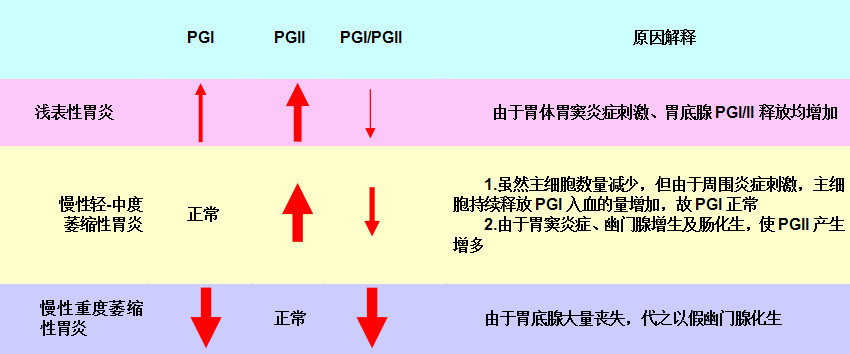
There are two subtypes of pepsin, PGI and PGII, and their levels reflect the morphology and function of gastric mucosa in different parts. PGI is a pointer to detect the function of gastric acid secreting gland cells. Increased gastric acid secretion, increased PGI, decreased secretion or gastric mucosal gland atrophy, decreased PGI; PGII is more correlated with gastric fundus mucosal lesions (relative to gastric antral mucosa), and its increase is related to gastric fundus gland duct atrophy, gastric epithelial metaplasia or pseudopyloric metaplasia, and heterotypic appreciation. Progressive decrease in PGI/II ratio is related to progression of gastric mucosal atrophy.
Pepsinogen (PG) on the development of gastric diseases, generally can be expressed as superficial gastritis-gastric mucosal erosion ulcer-atrophic gastritis-gastric cancer, and other diseases have a good diagnostic and screening role. PG I/II is used to detect the content of pepsinogen I/II in serum or plasma. Through the different serum measurement values, there are different degrees of changes in various gastric diseases, which provides reliable diagnostic value for clinical practice.
PG antigen
As the prediction and monitoring index of atrophic gastritis and gastric cancer, PGI and PGI/PGII ratio are important detection results. The project uses composite calibrators and quality control products. That is, two different antigens, of which pairing recognition with the antibody in the reagent is a big problem. After years of research, Nanjing Liding Medical Technology Co., Ltd. has greatly improved the adaptation of pepsinogen antigen by mutating the protein sequence and optimizing the storage buffer.
In the following, the stability of the antigen was tested by using the pepsinogen (PG) detection kit (latex enhanced immunoturbidimetry) developed by Nanjing Liding Medical Technology Co., Ltd. The results showed that PGI and PGII antigens were accelerated for 7 days at 37 ℃, and the deviation was within 10%. Store at 2-8 ℃ for 2 months with a deviation within 10%.
Related Products
Service Hotline
Address: Building C6, Nanjing Life Science and Technology Innovation Park
Email:marketing@leadingmed.com
Website:www.leadingmed.cn

WeChat Business Consultation
Copyright © All Rights Reserved: Nanjing Leading Medical Technology Co., Ltd.
 xy13584019024